- Creative Campaign
- AI Visuals
- Visual Production
- Music Video
- Advertising
- Baghdad
- Creative Direction
Surooh Real Estate
Location
Baghdad, Iraq
Year
2026
Timeline
2026
From 620+ Shots to the Final Experience
The final version of “Sawiha Ya Baghdad” was not built from a handful of successful AI shots. It was the result of a long process of experimentation, visual development, testing, and constant refinement. Behind every scene that appeared in the final video were multiple attempts exploring different environments, camera movements, lighting conditions, character treatments, transitions, and levels of realism. Throughout production, more than 620 visual shots and iterations were developed before reaching the scenes that delivered the right balance between imagination and believability. Some concepts looked visually powerful but needed stronger movement. Others felt realistic but lacked the cinematic energy required by the project. Each iteration pushed the visual language further until the selected scenes began to feel like parts of one continuous world rather than individual AI-generated images. One of the biggest creative challenges was building a modern and futuristic Baghdad without losing the character of the city itself. The goal was never to create an anonymous science-fiction environment. Instead, the team explored how Baghdad could look after decades of transformation and development—while still retaining visual elements that made the city recognizable and emotionally familiar to its audience. The river remained an important part of that identity. The skyline, architecture, scale of the city, futuristic infrastructure, atmospheric effects, and lighting were developed around it to create a vision that felt ambitious yet connected to Baghdad. Rather than functioning as a background, the city became one of the central characters of the visual story. Each scene was designed to reveal a different side of this future Baghdad. Wide aerial views established scale, closer sequences placed the characters inside the environment, while more dynamic shots allowed the camera to move through the city in ways that would be difficult to achieve through traditional production alone. Clouds, atmospheric haze, reflections, environmental movement, and lighting were all used to give the world depth and a stronger sense of reality. At the center of this visual experience was the voice and presence of renowned Iraqi artist Hussam Alrassam. His performance gave the project a powerful emotional and cultural anchor, and that presence raised the visual expectations of the campaign. The imagery could not simply sit behind the music—it needed to carry the same scale, confidence, and emotional energy. For that reason, the visual development constantly responded to the rhythm of the song. As the music grew, the camera language and environments evolved with it. Certain moments called for large cinematic reveals, while others required quieter compositions that allowed the artist’s presence to lead the scene. More energetic sections introduced faster transitions, immersive movement, and visual techniques inspired by high-end international advertising and VR-style experiences. The production team studied a wide range of global references, particularly campaigns that used seamless camera movement and transitions to move audiences between different environments. These references were not treated as templates to copy, but as inspiration for developing a visual language that could work specifically for Baghdad, for the song, and for the identity of the campaign. AI tools supported several stages of this process—from early visual ideation and image development to video generation, motion, and transition testing. But every generated result still required creative judgment. Each shot had to answer the same questions: Does the character feel real? Does the lighting belong to the environment? Does the camera movement make sense? Does the city feel alive? Does the transition strengthen the experience, or simply call attention to the effect? That constant evaluation was what transformed the process from generating AI content into building a complete cinematic experience. The objective was never for a frame to look impressive only when paused. It had to remain convincing in motion. Characters needed to maintain their presence and identity, environments needed to feel consistent from one shot to the next, and every visual element had to support the same world. After more than 620 shots, experiments, and refinements, the project gradually reached its final visual language. What began as individual ideas for futuristic Baghdad evolved into a complete environment with its own rhythm, atmosphere, and cinematic identity. When the final video reached audiences and gained millions of views within a short period, one reaction stood out in particular: many viewers did not immediately approach the scenes as obvious AI-generated imagery. Some questioned where the scenes had been filmed or how they had been created, while others found it difficult to clearly distinguish between reality and the AI-developed visual world. For us, that reaction became one of the clearest indicators of success. Because the strongest use of AI is not necessarily the one that makes audiences notice the technology first. It is the one that allows them to forget about the process for a moment, believe in the world in front of them, and simply experience the story.
THE CREATIVE COLLABORATION
Reimagining Baghdad Through AI and Cinematic Storytelling
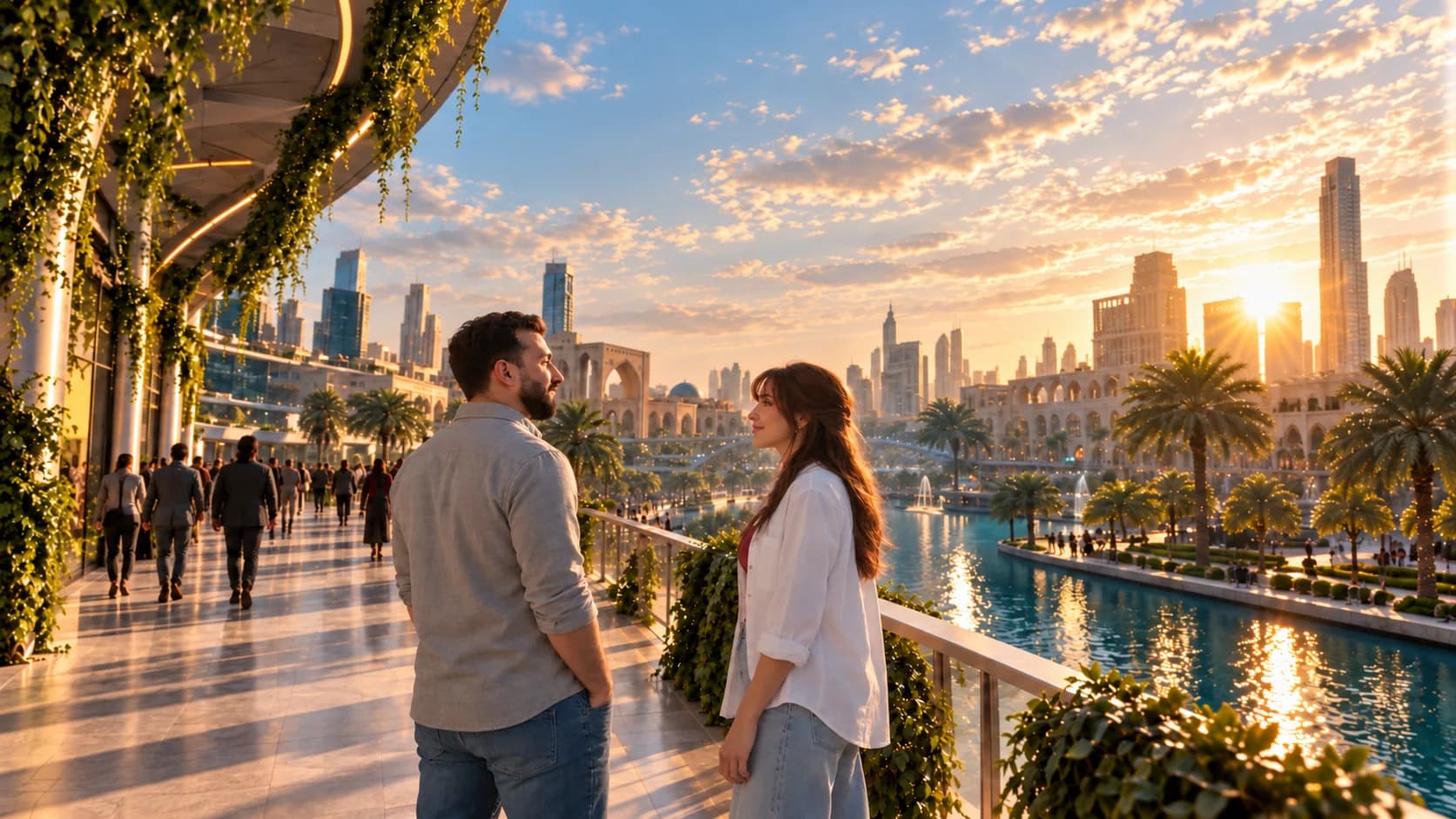
For “Sawiha Ya Baghdad,” Moovo collaborated with Frame Vision on the visual side of the video, with our role focused specifically on creating and developing the AI-generated scenes that shaped the project’s distinctive visual identity. Using the real characters as visual references, we reimagined them inside fully AI-developed environments and created a modern, futuristic vision of Baghdad. The work extended across the cityscape, the Baghdad river scenes, architectural details, atmospheric effects, lighting, and transitions, all designed to feel part of one cohesive cinematic world. One of the main challenges was achieving a level of realism that made the boundary between the real characters and the AI-generated environments feel almost invisible. Lighting, shadows, camera angles, depth, movement, and character interaction were carefully refined to create a believable and seamless result. The visual direction was also informed by references from international commercials, cinematic videos, and immersive VR-style experiences, particularly in the development of dynamic camera movements and transitions. More than 620 visual shots and iterations were developed throughout the process in order to reach the final selected scenes. AI tools were used across image development, video generation, and transitions, allowing the team to continuously refine the visual language of the project. The final result combined imagination with realism and gave the video a strong visual identity. As the project gained millions of views in a short period, one of the most notable audience reactions was how difficult it was for many viewers to distinguish between what was real and what had been created with AI.
BUILDING THE WORLD
Baghdad, Reimagined 100 Years Ahead
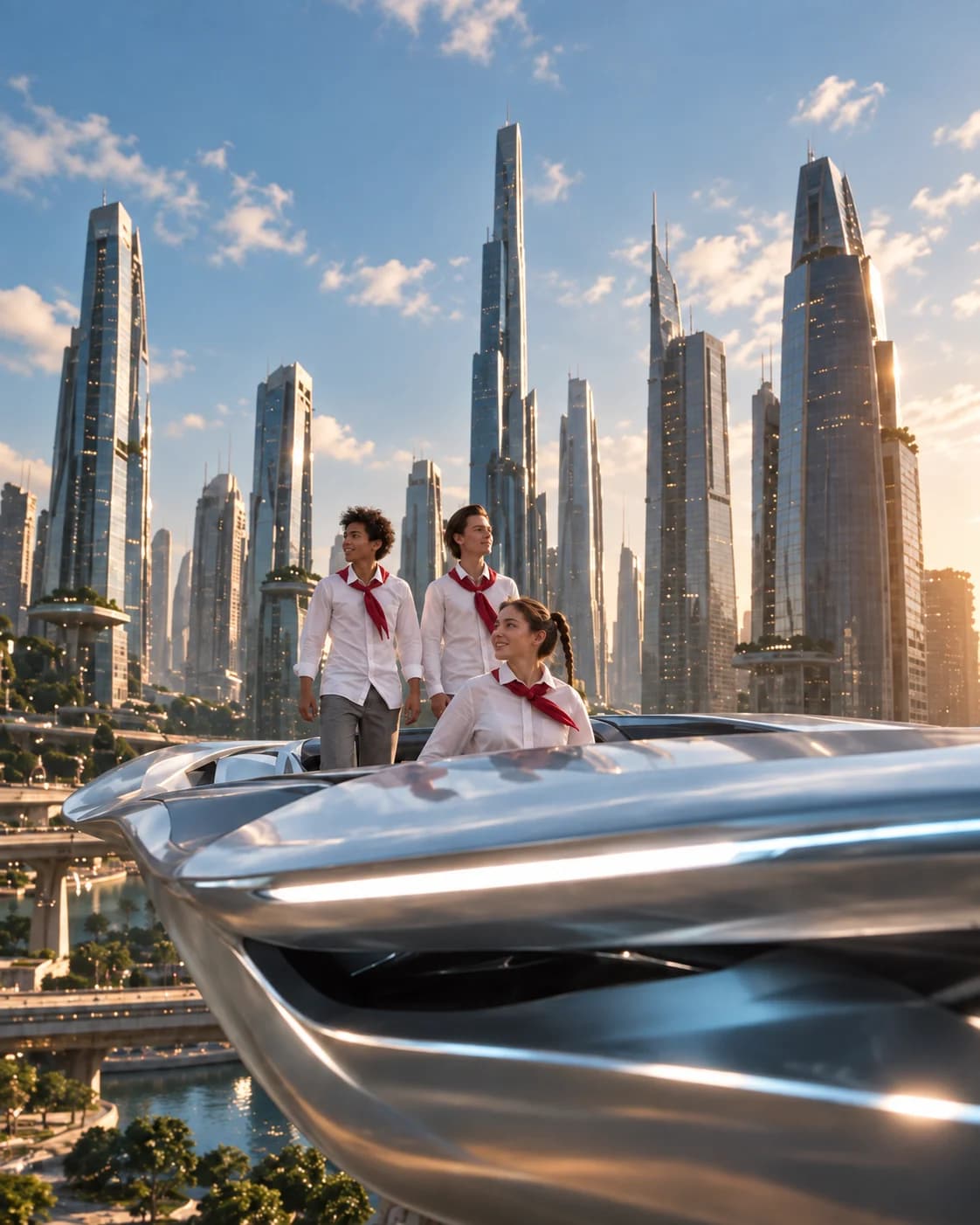
One of the most exciting and challenging parts of the project was building a new vision of Baghdad—a city that clearly belonged to the future without losing the local identity that makes it recognizable. The process began with a simple question: What could Baghdad look like 100 years from now? That question went far beyond architecture. It was about imagining how the city itself might evolve. How would its skyline change? What would its streets and infrastructure feel like? How could the river remain central to its identity? And most importantly, how could futuristic technology be introduced without turning Baghdad into a generic sci-fi city that could exist anywhere? From that starting point, the visual world of the campaign began to take shape. Large-scale environments were developed with modern architecture, advanced urban spaces, futuristic infrastructure, and a strong connection to the river. The intention was not to create an exaggerated or distant fantasy, but a future that felt visually ambitious while still believable enough for audiences to imagine. The city was treated as more than a background. It became an active part of the visual storytelling. Light moving across architectural surfaces, reflections on the water, atmospheric haze, cloud movement, street depth, and environmental scale all helped give each scene a stronger sense of life and realism. The real challenge, however, was consistency. AI can create a visually striking image quickly, but building an entire city that feels connected from one shot to another requires much more control. Architectural language, lighting conditions, atmosphere, scale, and visual tone all had to remain coherent across different scenes and camera angles. Camera movement became another important part of making the city feel real. Instead of simply presenting static views, the visual direction was designed to let the audience move through Baghdad. Wide shots established the scale of the city, closer scenes brought viewers nearer to the characters, and immersive transitions carried the camera naturally between different environments. Some of these techniques were inspired by international commercial work and immersive VR-style visual experiences, particularly in the way the camera enters, crosses, and reveals new environments. Those references were then reinterpreted to fit the identity of the campaign and the visual character of Baghdad itself. The final result was not simply a beautiful futuristic city. It became a complete visual world that supported both the story and the music—a Baghdad that felt advanced but familiar, imaginative but believable, futuristic yet still emotionally connected to the city audiences already know. For us, this became one of the most important ideas behind the project: using AI to expand imagination without erasing identity.
Next project
Emirates Airlines